The Wrong Man Theory of History
Every era sets its own tests. This one's tests — deterrence, prices, statistics, alliances, law — are all tests of credibility under verification. The record shows what happens when the man holding the answers treats credibility as a resource that can be printed.
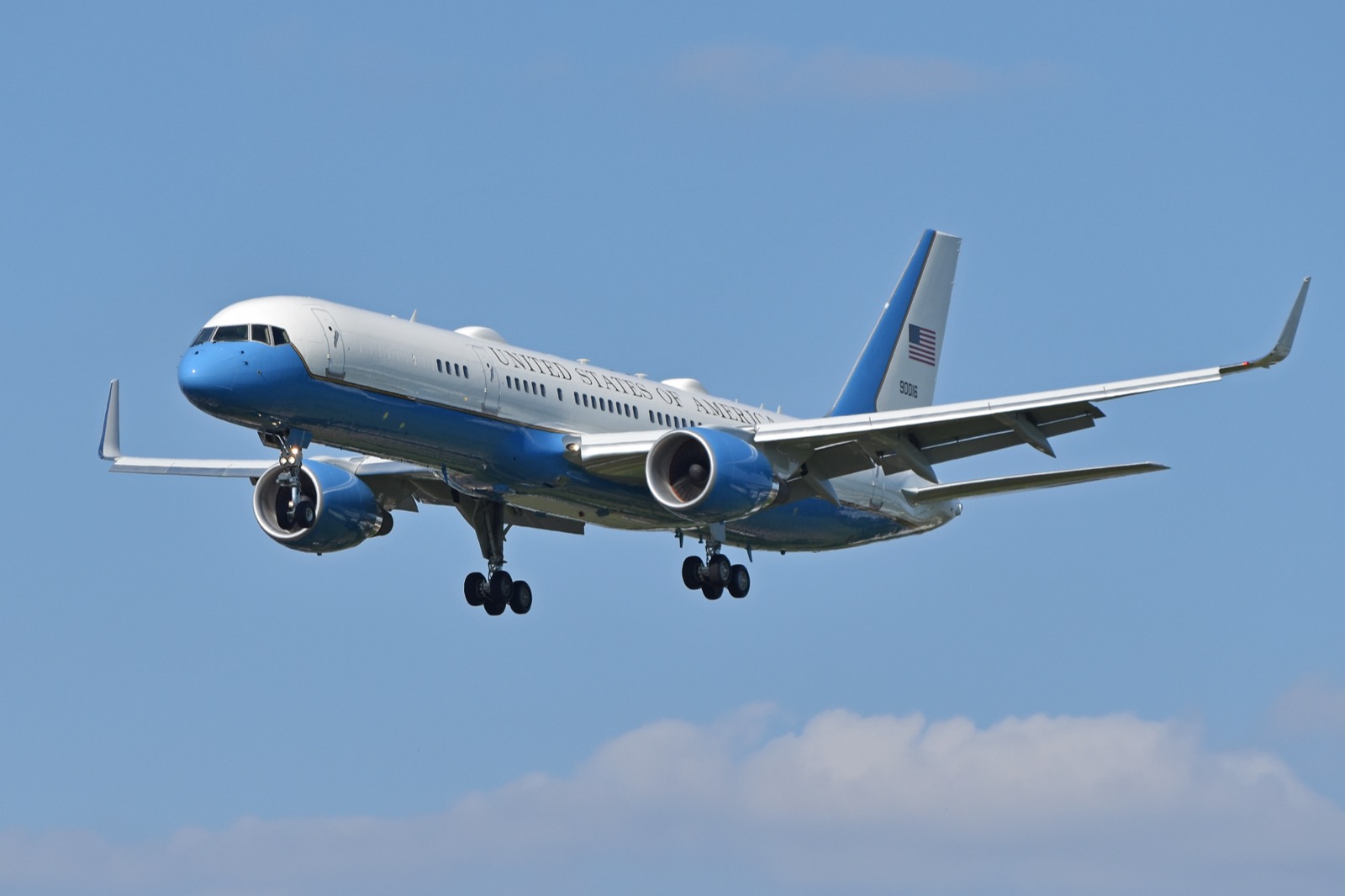
Consider one city, one week. Ankara, July 2026. At the NATO summit podium, the President of the United States called Iran's leaders "scum," "liars," "sick people," and "little loco," declared the ceasefire in his own war "over," and dismissed negotiation as "a waste of time." At the same press conference he claimed oil prices were lower than when the war began; they were higher, and rose further that morning on his words. And when it was time to leave, he did not leave the way presidents leave. U.S. intelligence had detected a credible threat — Iranian proxies, a missile, his aircraft — and so the President was moved through a catering truck onto a smaller military plane, while his Secretary of State, his traveling press, and most of his staff flew home on a decoy, told nothing. The gleaming 747 he had accepted from a foreign monarch could not carry him, because it lacks the defensive systems the older, plainer plane has. The White House then supplied a false cover story rather than no story at all.
Hold that week in your hand. A war he started, seeking him personally. A palace that cannot protect him. An insult where diplomacy was needed, a falsehood where a number was checkable, a deception where silence would have sufficed. Every pathology in one itinerary.
The claim of this essay is not that Donald Trump is a bad president, which is an opinion, or an incompetent one, which is an argument. The claim is narrower and stranger, and the archive can carry it: that this era's defining tests — the ones history will grade — are almost all tests of credibility under verification, and that the man holding the office fails them not randomly but systematically, because the instincts that won him power are the precise inverse of what each test requires. The era demands X; he supplies anti-X. Test by test, event by event, here is the record.
The Test of War
The first thing an era with a hair-trigger world asks of an American president is restraint — because the United States military is the one instrument whose misuse cannot be walked back. The record of 2026 opens with its misuse, twice, in eight weeks.
On January 3, more than 100 aircraft struck Venezuela in "Operation Absolute Resolve"; Delta Force seized President Nicolás Maduro, and the President of the United States posted a photograph of him blindfolded and handcuffed to Truth Social. Congress had authorized none of it. Eleven days later he announced that the United States would "run" Venezuela until a "safe, proper, and judicious transition" could be ensured — an occupation, declared in a press availability. When five Republicans joined every Democrat to advance a war powers resolution, 52 to 47, the President attacked the senators by name and declared they "should never be elected to office." Then he went further, posting that the War Powers Act itself is "Unconstitutional" — the 1973 statute that exists precisely because a president once made war on his own authority and lied about it.
Eight weeks later came Iran. On February 28, coordinated U.S.–Israeli strikes — "Operation Epic Fury" — killed Iran's Supreme Leader, and the President urged Iranians to "take over your government," calling it "probably your only chance for generations." Again, no congressional authorization; weeks earlier he had told Iranian protesters "help is on its way."
Then watch how the war was actually conducted, because the conduct is the character. In March he announced a massive bombing of Kharg Island with the claim that he had "obliterated every MILITARY target" but spared the oil "for reasons of decency." He issued a 48-hour ultimatum to "obliterate" Iranian power plants unless the Strait of Hormuz reopened by Monday evening — then postponed the strikes for five days, citing "very good and productive conversations," in a reversal that observers read as aimed at calming the financial markets his ultimatum had spooked. Deadlines issued for spectacle, walked back for the Dow: this is nuclear-adjacent brinkmanship run on the rhythms of a ratings sweep. When the ceasefire that eventually followed collapsed in July, his lawyers produced a theory that renewed hostilities reset the War Powers Resolution's 60-day clock — war as a subscription that renews itself. Days after fleeing Ankara in a catering truck, his summary of the situation to reporters was "We're locked and loaded. We're ready to go." And when two American service members were killed at a base in Jordan, the first combat deaths of the resumed war, the Commander in Chief's public reflection was that it was "a very sad thing" and that "we hate to see it happen."
The era's test was restraint. The documented answer was two unauthorized wars, a dead head of state, a constitutional statute declared void by social media post, and a shrug for the dead. Whatever one believes about any single strike, the pattern is the point: the gravest power the office holds, exercised as impulsively as the office's Truth Social account.
The Test of the Price
Wars have invoices, and this era mails them to the grocery store. Within days of the Iran strikes, crude hit $119.50 a barrel. The President's response, on the record: higher oil prices were "a small price to pay" — "There is not an oil shortage," "Prices will drop again soon." By mid-March, with the Strait of Hormuz effectively blockaded, oil was up more than 40 percent, Brent above $106, in what analysts called the worst supply disruption in history, with Goldman Sachs revising inflation forecasts upward and putting recession odds at one in four. The President's contribution to public understanding was that the closure of the strait "doesn't really affect" the United States — as gas prices spiked — and, later, that prices would "drop like a rock" as soon as the war he kept extending ended.
The denial has a prehistory, because the affordability crisis predates the war. In December 2025, weeks before Christmas, his advice to families squeezed by prices was that children need "1 or 2" pencils instead of 37, and "two or three" dolls — while 60 percent of Americans told pollsters he makes inflation "sound better than it really is." In a national address that month he claimed egg prices were down 82 percent (the real figure was 43) and that "inflation has stopped" — while CPI ran at 3 percent, with roughly half a point attributed to his own tariffs, 82 percent of whose costs are paid by American companies and consumers. In May, consumer confidence was "way up" at what measures showed to be all-time lows. In July, inflation was "way down" — at 3.5 percent, above where he inherited it — and the fault, he explained, was the Democrats'.
By August the invoice had compounded: gasoline up 34 percent, electricity up 8, overall prices up 4.3 percent on his term with coffee up 35 and ground beef up 23 — driven substantially, the fact-checkers noted, by the war he chose. His answer to a Fox audience: the groceries are "all coming down." That same month the labor market flipped negative — 23,000 jobs lost in July, with 103,000 more revised away — and the White House called it an industrial resurgence, on schedule.
The tariff half of the price test deserves its own line, because it produced one of the term's starkest constitutional moments. When the Supreme Court ruled 6–3 that he had exceeded his authority by imposing tariffs without Congress, the President called the justices "a disgrace to the nation," claimed he already had approval "in many forms, a long time ago," and immediately rerouted the same tariffs through a different statute. The era's test: manage an inflation shock. The documented answer: cause one by war, deepen it by tariff, deny it by post.
The Test of the Ledger
Every previous test could, in principle, be failed honestly. This one cannot, because it is honesty. An age of synthetic media and collapsing institutional trust asks one thing above all of a government: that its numbers stay clean — that the jobs report, the inflation index, the vote count remain the shared instruments a country steers by.
The record on the instruments: he posted unreleased federal jobs data on Truth Social twelve hours before the official release, violating the embargo that exists to prevent market manipulation. He posted an inflation chart that froze his own rate and assumed literal zero inflation for the remaining thirty months of his term so the comparison would flatter him. He fabricated his approval rating at +64 while measured net approval stood at minus 12; announced "The highest poll numbers I have ever received" at second-term lows across four major surveys; and converted an NBC poll of self-identified MAGA supporters into a claim of "100% approval within the Republican Party," attributed to the wrong network, while his disapproval hit a second-term high. Where fabrication failed, he reached for force: he expanded a $15 billion lawsuit to cover an unfavorable poll while suggesting that unfavorable surveys should be criminalized. Two days before this essay was written, he claimed the Federal Reserve's board had been "voting to raise interest rates" for political reasons; the board has not voted to raise rates since July 2023 — it had cut them three times in late 2025, under the chair he himself installed and praised.
None of this is new instinct — the archive holds a hurricane map altered with a Sharpie to protect a wrong tweet, and a cybersecurity director fired for stating that a fair election was fair. What is new is the stakes. Sharpiegate defaced a weather map. The same reflex, applied in 2026, defaces the instruments a superpower uses to price debt, set rates, and believe its own elections. The era's test: keep the gauges trustworthy. The documented answer: argue with the altimeter, and sue it.
The Test of the Deterrent
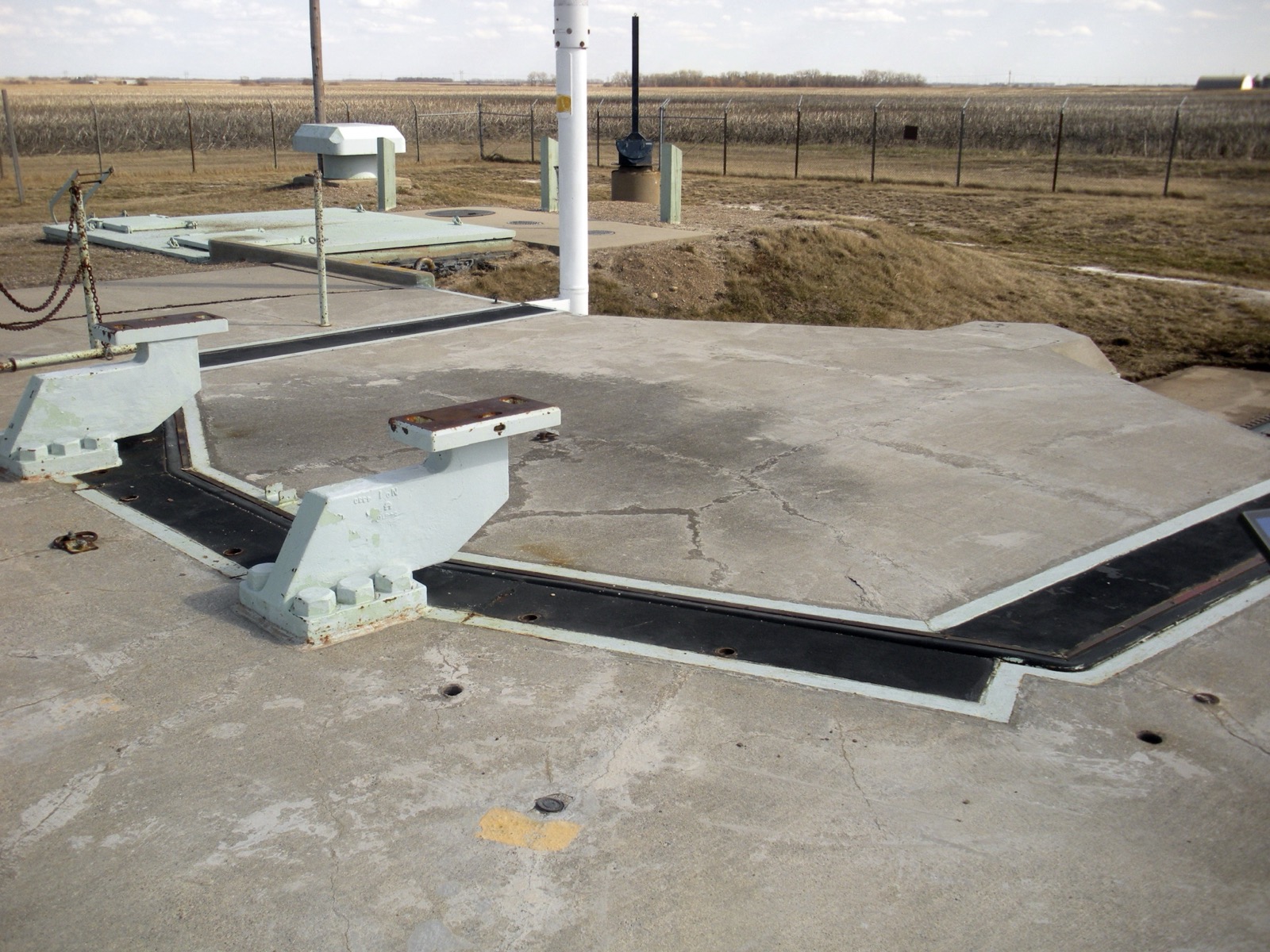
If the era has a single test of seriousness, it is nuclear stewardship — the unglamorous, decades-long work of keeping deterrence credible while the arsenal ages. The record contains one transaction that functions as a thesis statement, and it would be rejected in fiction as too obvious.
In 2025, the Air Force quietly moved $934 million out of the Sentinel program — the modernization of the land-based leg of the nuclear triad — toward a classified project: converting the Boeing 747-8 "flying palace" that the President had accepted from the royal family of Qatar over the objections of constitutional scholars who called it precisely what the Emoluments Clause was written to prohibit. The gift's structure routes the jet to his presidential library when he leaves office. His public framing was that it was "FREE."
Follow the money in one sentence: funds for the missiles that deter great-power war were tapped to gild a foreign monarch's gift that will end its life as a monument to the man who accepted it. The library destination is not incidental — the same presidential library project is already the subject of a constitutional lawsuit over a Miami land deal — it is the pattern: public office as intake valve, personal monument as outlet. And the palace does not even work as a palace: when journalists reported it lacked antimissile defenses, the administration subpoenaed the journalists — FBI agents delivering grand-jury subpoenas to reporters' homes over a story about the President's own safety; when a real missile threat materialized in Ankara, the President abandoned the jet for the older plane the reporters had been proven right about. The era's test: treat the deterrent as sacred. The documented answer: treat it as a budget line for the gift shop.
The Test of Allies
The era's geopolitics — a two-front authoritarian challenge, contested sea lanes, a war he himself opened — make allies the force multiplier no budget can replace. The record of how this administration spends alliance capital is compact and brutal.
In January, the President threatened escalating tariffs on eight NATO members — Denmark, Norway, Sweden, France, Germany, the United Kingdom, the Netherlands, and Finland — to pressure them into facilitating an American purchase of Greenland. Denmark's Prime Minister had already rebuked the annexation talk as making "absolutely no sense"; at Davos, the President graciously ruled out taking the territory by military force, while issuing a veiled threat to the allies all the same.
Then came March, and the bill. With the Strait of Hormuz blockaded by the war he had launched without consulting a single ally, the President told the Financial Times the campaign "should have always been a team effort" and demanded NATO warships — from, among others, the eight countries he had spent January threatening with tariffs over a territorial shakedown. The sequence needs no commentary: threaten the allies in winter, beg them in spring.
The alliance ledger has a second column: what he extends to governments that flatter him. In July he announced the lifting of CAATSA sanctions on Turkey and floated selling it F-35s, in defiance of a congressional prohibition — days before Ankara hosted the summit where he insulted Iran's leadership from the podium and fled in a catering truck. Treaty allies get tariff threats over territory; the strongman host gets sanctions relief over statute. By August even Greenland itself was pushing back, forcing a Trump-linked oil firm to delay drilling amid the annexation threats — 56,000 people, holding a line that eight NATO capitals were tariff-threatened for holding. The era's test: compound your alliances. The documented answer: spend them like campaign money, then wonder where they went.
The Test of Law
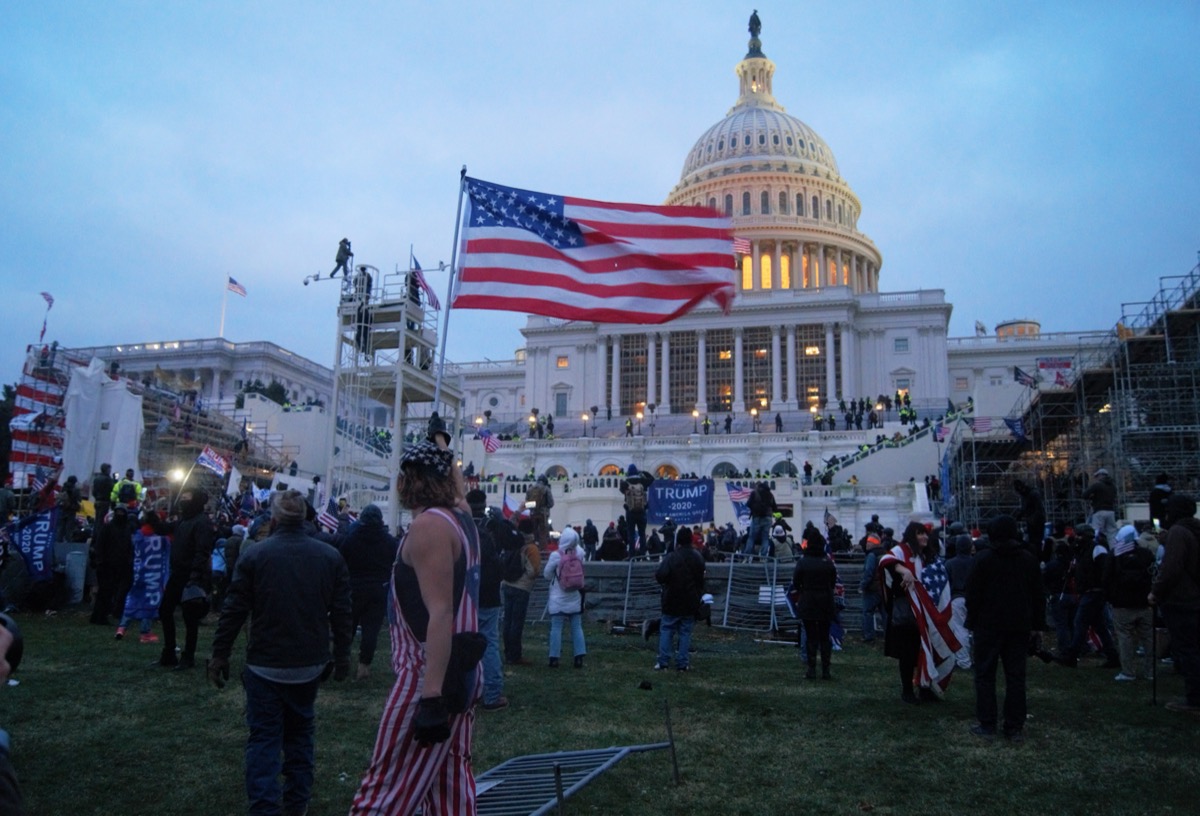
Finally, the test underneath all the others: whether law binds power or merely decorates it. The second term opened with its answer. On day one, the President granted blanket clemency to roughly 1,500 people convicted or charged in the January 6 attack — including more than 600 convicted of assaulting or obstructing police, 170 convicted of using a deadly weapon, and the seditious-conspiracy leadership of the Proud Boys and Oath Keepers. A year later, on the fifth anniversary — while a plaque honoring the officers who defended the building sat in storage over Republican objections, and among the pardoned walked the man who assaulted Officer Brian Sicknick — the White House published an official government website celebrating the pardons, describing the prosecutions as "one of the darkest wrongs in modern American history" and the pardoned as "patriotic citizens." An official .gov domain, rewriting an attack on the government it belongs to.
The pattern since is a single direction of travel. The Supreme Court's ruling in Trump v. Slaughter overturned ninety-one years of precedent — Humphrey's Executor, the 1935 case that kept independent agencies independent — to let the President remove their officials at will; the referees now serve at the pleasure of the team. Pardons flow to a major donor and nine commercial emissions-fraud convicts, recast as men "persecuted" for "fixing their car." Judges who rule against him are "Trump Hating"; plaintiffs who sue him are "TREASONISTS"; his own U.S. Attorney, when she follows the evidence and drops charges, is publicly rebuked for it. A Democratic congressman who criticized him on Fox News "should not be allowed on FoxNews" without an anchor to dispute him — the head of state assigning debate conditions to a private network. It took a federal court to affirm that a protest flag is protected speech the government cannot permit away. The era's test — the oldest one — is whether the pardon, the prosecution, and the bench serve the public or the man. The record answers one act at a time, and the acts all point the same way.
The Selection Mechanism
Line the tests up and the shape appears. The era demanded restraint with the military; the record shows two unauthorized wars in eight weeks. It demanded price stability; the record shows a war-made oil shock called "a small price to pay." It demanded clean instruments; the record shows embargoed data posted early and charts redrawn. It demanded nuclear seriousness; the record shows the deterrent's budget tapped for a gifted palace. It demanded allies; the record shows eight of them tariff-threatened over Greenland and then begged for warships. It demanded law above loyalty; the record shows 1,500 pardons for the mob that came for the Congress.
This is not bad luck, and it is not ordinary incompetence, which errs at random. It is inverted fit — and the inversion has a mechanism. The traits that fail every one of these tests are the traits that won the office: the shamelessness that cannot absorb a correction, the spectacle that must escalate, the instinct to personalize every institution and monetize every asset, the refusal to ever be the one explaining. Those are dominant strategies in a campaign, which is a contest of narrative. They are catastrophic in government, which is, in the end, a physics problem. You can repaint a 747 in your livery; you cannot spin a missile. You can call a jobs report a resurgence; the payrolls still shrink. You can call a senator "Pee-wee Herman"; the sentence he said remains true.
Note what the tests have in common, because it is the deepest layer of the mismatch. Deterrence is a credibility game — it works only if adversaries believe the threat and allies believe the guarantee. Central banking is a credibility game. Statistics are a credibility game. Alliances, courts, ceasefires, currencies: all of them are machines built out of believed words. This era, more than most, runs on such machines, and it stress-tests them constantly — with synthetic media, with great-power rivalry, with markets that reprice a sentence in seconds. Into that era arrived a man whose entire method is to spend credibility as if it were infinite: to issue the ultimatum and withdraw it, to declare the statute unconstitutional by post, to promise "FREE" and bill a billion, to lie about the plane he was standing in front of. Credibility is the one currency that cannot be printed, and the record shows him printing it anyway, at volume, into the exact era that audits every note.
The selection mechanism and the performance requirements have come apart, and the man in the gap is not an aberration. He is what the gap produces — chosen precisely for the wrecking-ball traits, by an electorate persuaded the institutions deserved wrecking, and now presiding over the discovery that the institutions were also the things holding up the roof.
Honesty requires the other column too, because the record holds it: a Supreme Court that ruled 6–3 against the tariffs, a Senate that went 52–47 on war powers with five Republicans crossing, courts that keep halting the ballroom and protecting the flags, networks that declined to air the address, a statistical agency that published the minus-23,000 on schedule anyway, and an island of 56,000 people that made his oil partners stand down. The era that set the tests also built the verification infrastructure — the courts, the surveys, the fact-checks, archives like this one — and that infrastructure is why the failures are legible at all.
That is the final meaning of the moment this archive has spent August documenting. The era keeps asking its questions — about the war, the prices, the deterrent, the allies, the law. He keeps answering in the only language he has: the nickname, the chart, the pardon, the post. And the record keeps writing his answers down, one sourced event at a time, for the accounting that always, eventually, arrives. History will not need to editorialize about the wrong man. It will only need to read the ledger he could not stop signing.