The Ballot Seizure
Five years after losing Georgia by 11,779 votes, Trump's FBI seized the ballots—and his intelligence chief rode along to watch
Prologue: The Number
The number was 11,779. That was Joe Biden's margin of victory in Georgia in the 2020 presidential election—a margin that survived not one, not two, but three separate counts of nearly five million ballots. A machine count. A full hand recount. And then another machine recount requested by Trump himself. Three times Georgia counted. Three times Biden won.1

On January 2, 2021, Donald Trump called Georgia Secretary of State Brad Raffensperger and spent an hour demanding that he "find 11,780 votes"—exactly one more than the margin.2 When Raffensperger refused, Trump endorsed a primary challenger to replace him. When that challenger lost, Trump continued to claim Georgia had been stolen. When a Fulton County grand jury indicted Trump and eighteen co-conspirators for racketeering in August 2023, Trump called it "election interference." When the case was dismissed in November 2025—after the special prosecutor who replaced the disqualified Fani Willis decided that the "federal government is the appropriate venue"—Trump claimed vindication.3
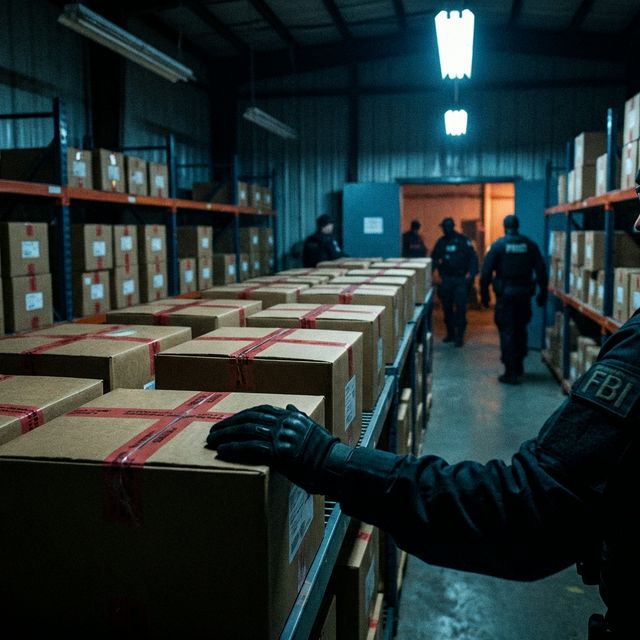
And then, on January 28, 2026, FBI agents arrived at the Fulton County Elections and Operations Hub and seized 700 boxes of ballots from the 2020 election.
Five years after he lost. Three counts after the result was certified. One year after returning to power.
This is the story of what happened that day—and what it reveals about what is coming next.
Part I: The Count, The Recount, The Re-Recount
To understand what the Trump administration seized in Fulton County, you must first understand what it was: the physical record of a democratic election that had been scrutinized more thoroughly than perhaps any county election in American history.
Georgia 2020: Three Counts
The hand recount was exactly what it sounds like: every one of nearly five million ballots was examined by human beings and counted by hand. It took teams of workers across all 159 Georgia counties several days. During that process, they discovered what happens in large-scale elections: some memory cards hadn't uploaded properly in Floyd County. Some ballots in Fayette County had been missed in the initial tabulation. Human errors, caught and corrected—not fraud.
Trump himself had requested the third count. He paid $2.8 million for it. It confirmed what the first two counts had shown: he lost.
These counts were certified by Georgia's Republican Secretary of State, Brad Raffensperger. They were certified by Georgia's Republican Governor, Brian Kemp. The results survived over sixty court challenges nationwide, including multiple challenges in Georgia. Trump's own Attorney General, William Barr, stated in December 2020 that the Justice Department had found "no evidence of widespread voter fraud."4
None of this mattered. For Trump, the count was never the point. The claim was the point. And now, five years later, he has the machinery of the federal government to make the claim feel real.
Part II: The Raid
On the morning of January 28, 2026, approximately twenty-five FBI personnel arrived at the Fulton County Elections and Operations Hub on Campbellton-Fairburn Road. They came with a search warrant signed by Magistrate Judge Catherine M. Salinas. Fulton County officials were not notified in advance.
The warrant authorized the seizure of all physical ballots, ballot images, tabulator tapes, and voter rolls from the 2020 presidential election. It cited possible violations of two federal statutes—one requiring election records to be retained for a certain period, and another criminalizing voter intimidation or procurement of false votes.5
By the end of the day, FBI agents had removed approximately 700 boxes of material. They took original ballots—the actual physical records of how nearly one million Fulton County residents voted in 2020.
This had never happened before. In the history of the United States, the FBI had never seized original election ballots as part of a criminal investigation into an election the sitting president lost.
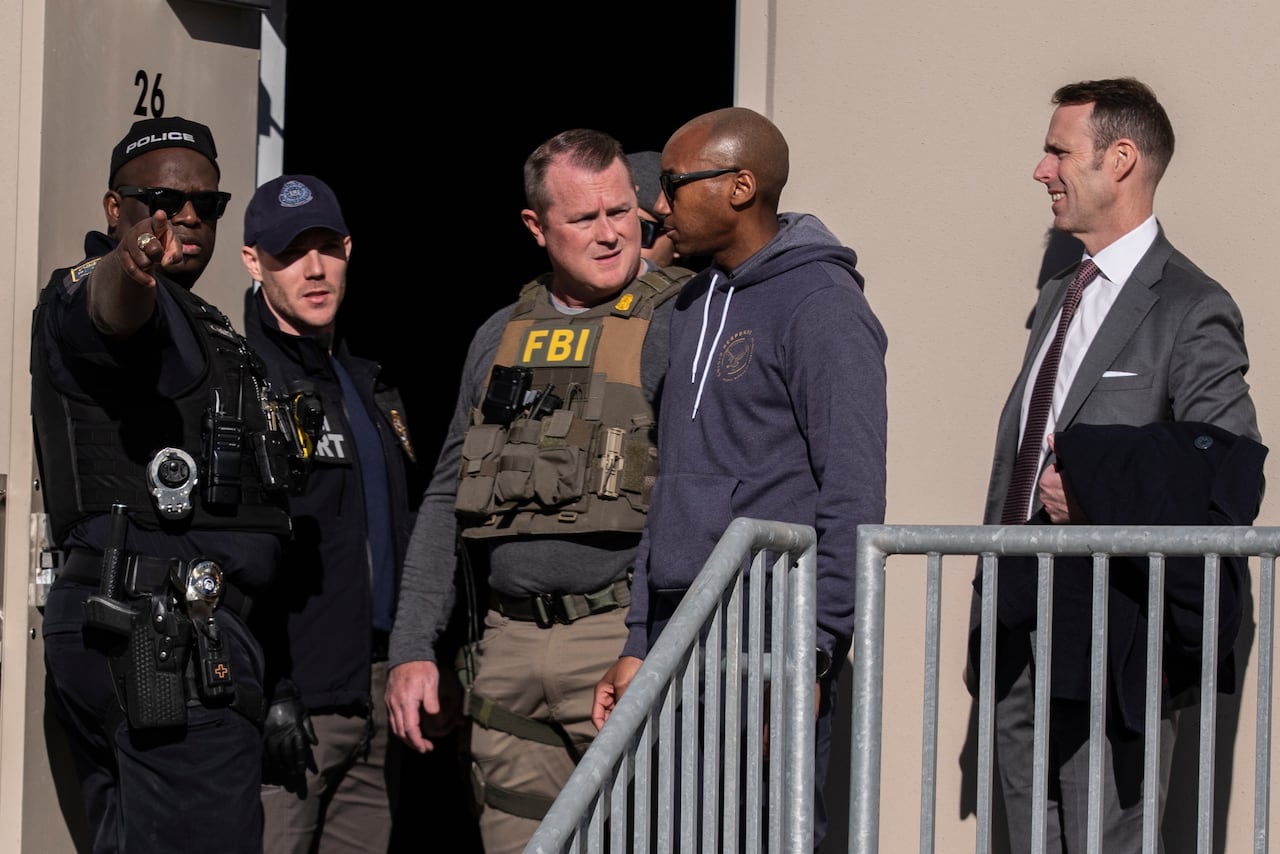
FBI Director Kash Patel defended the action: "We presented our facts and the findings of the investigation, and the judge determined there was probable cause." But the affidavit supporting the warrant remains sealed. The public does not know what "facts" the FBI presented, what specific crimes are alleged, or who the targets of the investigation are.6
There is one more detail about this warrant that matters: it was signed by a U.S. attorney from the Eastern District of Missouri—not the Northern District of Georgia, where Fulton County is located. Attorney General Pam Bondi has reportedly vested this prosecutor with nationwide authority to investigate "voter fraud."
The message is clear: this investigation will not be constrained by local prosecutors who might have inconvenient relationships with local officials or local facts.
Part III: The Spy Chief in the Evidence Truck
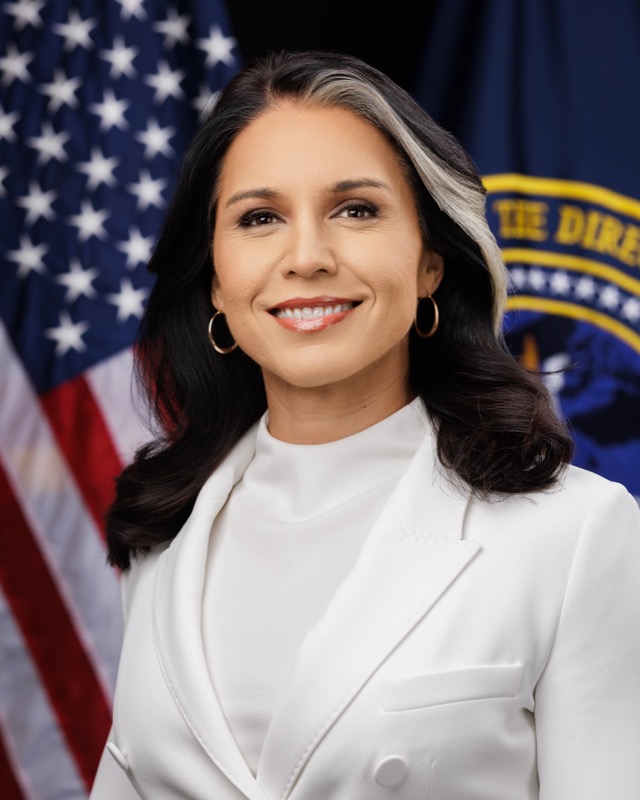
As FBI agents executed the search warrant, witnesses noticed something unusual: Tulsi Gabbard, the Director of National Intelligence, was at the scene. Senator Jon Ossoff of Georgia later described her as "bizarrely and personally lurking in an FBI evidence truck."7
This requires explanation. The Director of National Intelligence oversees America's spy agencies—the CIA, the NSA, and sixteen other intelligence organizations. The DNI's job is to track threats from foreign adversaries. The position was created after 9/11 specifically to coordinate intelligence about external threats to national security.
The DNI is not a law enforcement officer. The DNI has no role in executing FBI search warrants. The DNI is, by law, prohibited from participating in domestic law enforcement activities.
When Deputy Attorney General Todd Blanche was asked about Gabbard's presence, he admitted he didn't know why she was there. "She is not part of the grand jury investigation," he said, before adding that she is "a key part of our efforts at election integrity."8
Days later, in a letter to congressional Democrats, Gabbard provided her own explanation: Trump "specifically directed" her to attend.9
She claimed authority under her "broad statutory" powers to "coordinate, integrate, and analyze intelligence related to election security, including counterintelligence, foreign and other malign influence, and cybersecurity." She noted that her office's general counsel had found her actions "consistent and well within" her authority.
This justification is remarkable. Gabbard is arguing that she can participate in a domestic FBI raid on a county election office because "election security" falls within her purview. By this logic, the DNI could accompany FBI agents on any search warrant touching any topic that might theoretically have a foreign nexus—which is to say, almost anything.
But the justification matters less than the fact. The president's handpicked intelligence chief—a former Democrat who endorsed Trump and was rewarded with oversight of America's spy apparatus—was personally present to witness the seizure of ballots from the election her boss lost.

Part IV: The Phone Call
What happened next would have been unthinkable in any previous administration.
After the search warrant was executed, Gabbard arranged for the FBI agents who conducted the raid to have a phone call with President Trump. The president was put on speakerphone. He praised the agents for doing "great work" investigating Georgia's elections.10
Sources described the call as brief—approximately one minute. One source likened it to "a halftime pep talk." Trump asked a few questions and praised the agents. Gabbard, in her letter to Congress, claimed the president "did not ask any questions, nor did he or I issue any directives."
The discrepancy between these accounts—did Trump ask questions or didn't he?—matters less than the fact of the call itself.
A sitting president spoke directly with line FBI agents about an ongoing criminal investigation into an election he lost.
The investigation was initiated by his administration. The FBI director was his appointee. The intelligence chief who arranged the call was his appointee. And now the president was personally thanking the agents for their work.
The implications are staggering. FBI agents conducting this investigation now know that the President of the United States is personally invested in their work—personally grateful for it. They know that the DNI, who controls their access to classified intelligence, arranged for them to receive that gratitude. They know that their careers depend on appointees who report to a president who has called for prosecuting his enemies and who maintains a well-documented "enemies list."
This is not how independent law enforcement works. This is how law enforcement works when it serves a political master.
Part V: The Response

Fulton County officials did not accept the seizure quietly. Commissioner Marvin Arrington Jr. announced the county would file a federal lawsuit challenging the warrant's legality and seeking return of the ballots. He argued that the FBI was authorized to access and make copies of the records—not to seize the originals.11
Fulton County Commission Chairman Robb Pitts was more direct: "Fulton County has been targeted for years... because I refused to bend to pressure" from Trump in 2020. He accused the administration of political retribution.12
In Washington, Senator Mark Warner of Virginia—the vice chairman of the Senate Intelligence Committee—called on Gabbard to testify about her presence at the raid and her arrangement of the Trump phone call.
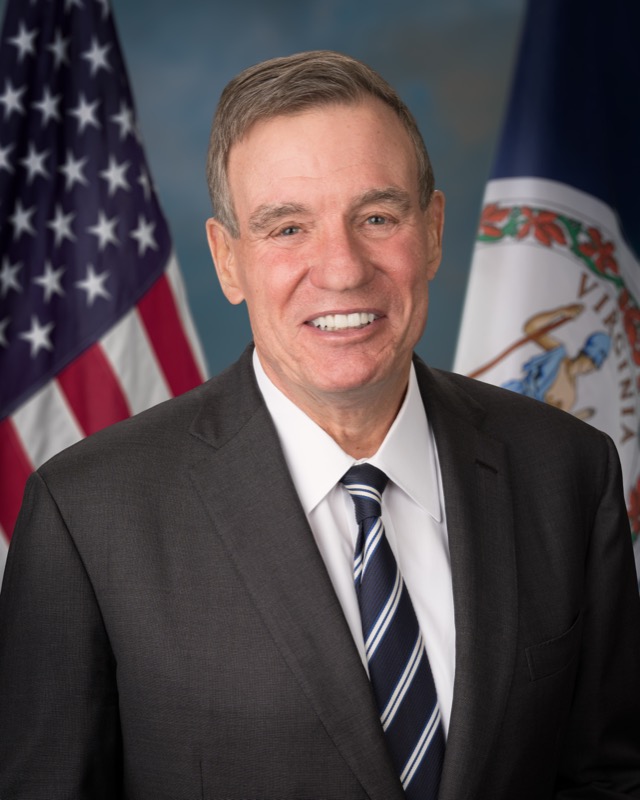
Warner noted that Trump had recently suggested Republicans should "take over" and "nationalize" elections. "That statement alone makes clear that this threat to our election security, the basic premise of our democracy, is forward looking to 2026 and into 2028."13
After receiving Gabbard's letter, Warner's office said it "raises more questions than it answers."
Part VI: The Pattern
The Fulton County raid did not happen in isolation. It is part of a broader campaign by the Trump Justice Department to seize control of election administration nationwide.
Since taking office, the DOJ has demanded complete voter registration lists from all fifty states—massive databases containing names, addresses, driver's license numbers, and partial Social Security numbers for every registered voter. At least eleven states have complied. Twenty-three states and the District of Columbia have been sued for refusing.14
The stated purpose is to identify non-citizens on voter rolls. The results have been telling: out of 49.5 million voter registrations run through the federal SAVE program, only 0.02 percent have been flagged as potential non-citizens—a number consistent with data entry errors, not a vast conspiracy.
But the Fulton County raid suggests the real purpose may be different. As voting rights correspondent Ari Berman put it on Democracy Now!: "We're seeing a dramatic escalation of the administration's tactics to try to interfere in the 2026 midterm elections. The FBI raid in Fulton County represented the full weaponization of Trump's conspiracy theories about the 2020 election."15
Fulton County Commissioner Mo Ivory warned that this operation would likely spread: "Fulton County is right now the target, the only county right now fighting over an election that already happened... But it is coming to a place near you. This is the beginning of the chaos of 2026 that is about to ensue."16
Part VII: The 2026 Question
Multiple analysts have observed that the Fulton County raid is not really about the 2020 election. It cannot be: that election has been counted, recounted, litigated, certified, and consigned to history. Biden served his term. Trump is back in power. What happened in 2020 cannot be undone.
But 2026 has not happened yet. And 2028 is coming.
As the Atlanta Journal-Constitution editorialized: "The raid in Fulton County is not really about the 2020 elections at all... Instead, the raid is about the next elections—who will control them in Fulton County in 2026 and who will run them in Georgia two years after that when the 2028 presidential election takes place."17
UCLA law professor Rick Hasen, one of the nation's foremost election law scholars, made a similar point: "I'm much more worried about the signal this sends to election administrators and others for 2026 looking forward than I am about what might happen to those looking backward."18
The signal is unmistakable. Election officials who resist Trump's demands—who count the votes honestly, who certify accurate results, who refuse to "find" votes that don't exist—now know that the FBI may show up at their offices. They know the DNI might ride along. They know the president might call the agents personally to thank them.
Fulton County Chairman Robb Pitts identified the mechanism: "It is having a chilling effect on even those who would want to come forward and serve as poll workers."
This is how you rig an election without stuffing ballot boxes. You don't need to change votes if you can intimidate the people who count them. You don't need to manufacture ballots if you can seize the real ones and declare them fraudulent. You don't need to win the argument if you can make the argument irrelevant by controlling the machinery of investigation.
Epilogue: The Boxes
Somewhere in FBI custody, there are now 700 boxes of ballots. Each one represents a choice made by a Fulton County resident in November 2020. Each one was counted three times. Each one was certified by Republican officials in a Republican-controlled state.
None of that matters now. What matters is that those ballots are in federal hands. What matters is that a president who called the election "rigged" and "stolen"—who demanded that officials "find" votes to overturn the result—now controls the investigation into those votes. What matters is that his intelligence chief rode along to watch. What matters is that he called the agents to say thank you.
The 2020 election is over. It has been over for five years. Joe Biden won Georgia by 11,779 votes. That is a fact, confirmed by three counts, certified by state officials, upheld by courts, acknowledged even by Trump's own attorney general.
But in the era of the anti-reality field, facts are not fixed points. They are targets. And the machinery to unmake them is now in motion.
What happens to those 700 boxes will not change 2020. But it may well determine 2026, and 2028, and every election after—if elections, as we have known them, continue to exist at all.
Notes & Sources
- Georgia 2020 election results from Georgia Secretary of State's office. Biden won with 2,473,633 votes to Trump's 2,461,854—a margin of 11,779 votes (0.24%). See NPR coverage →
- Trump-Raffensperger call, January 2, 2021. View in Griftbook →
- Georgia RICO indictment, August 14, 2023. View in Griftbook →
- Attorney General Bill Barr's statement on voter fraud, December 1, 2020. View in Griftbook →
- FBI raid on Fulton County Elections Hub, January 28, 2026. View in Griftbook →
- Kash Patel statement on probable cause. ABC News →
- DNI Gabbard presence at raid. View in Griftbook →
- Todd Blanche statement on Gabbard. The Hill →
- Gabbard's letter to Congress. View in Griftbook →
- Trump phone call with FBI agents. View in Griftbook →
- Fulton County lawsuit announcement. View in Griftbook →
- Chairman Robb Pitts statement. NPR interview →
- Senator Warner demands testimony. View in Griftbook →
- DOJ voter roll campaign. View in Griftbook →
- Ari Berman on Democracy Now! Democracy Now! →
- Commissioner Mo Ivory statement. Common Dreams →
- Atlanta Journal-Constitution editorial. AJC →
- Rick Hasen quoted in ProPublica. ProPublica →