The 187 Minutes
On the fifth anniversary of January 6, a reckoning with what a president did—and didn't do
Prologue: The Dining Room
At 1:10 PM on January 6, 2021, Donald Trump walked into the White House dining room adjacent to the Oval Office. He would not leave for three hours and seven minutes.1
In that room, there was a television tuned to Fox News. There was his phone. There were aides who came and went with increasing desperation. And there was the President of the United States, watching the attack on the Capitol unfold on live television, doing nothing to stop it.
This is not speculation. This is not partisan framing. This is the documented, minute-by-minute account established by the House Select Committee through testimony from his own staff, his own lawyers, his own family members. The 187 minutes are irrefutable.
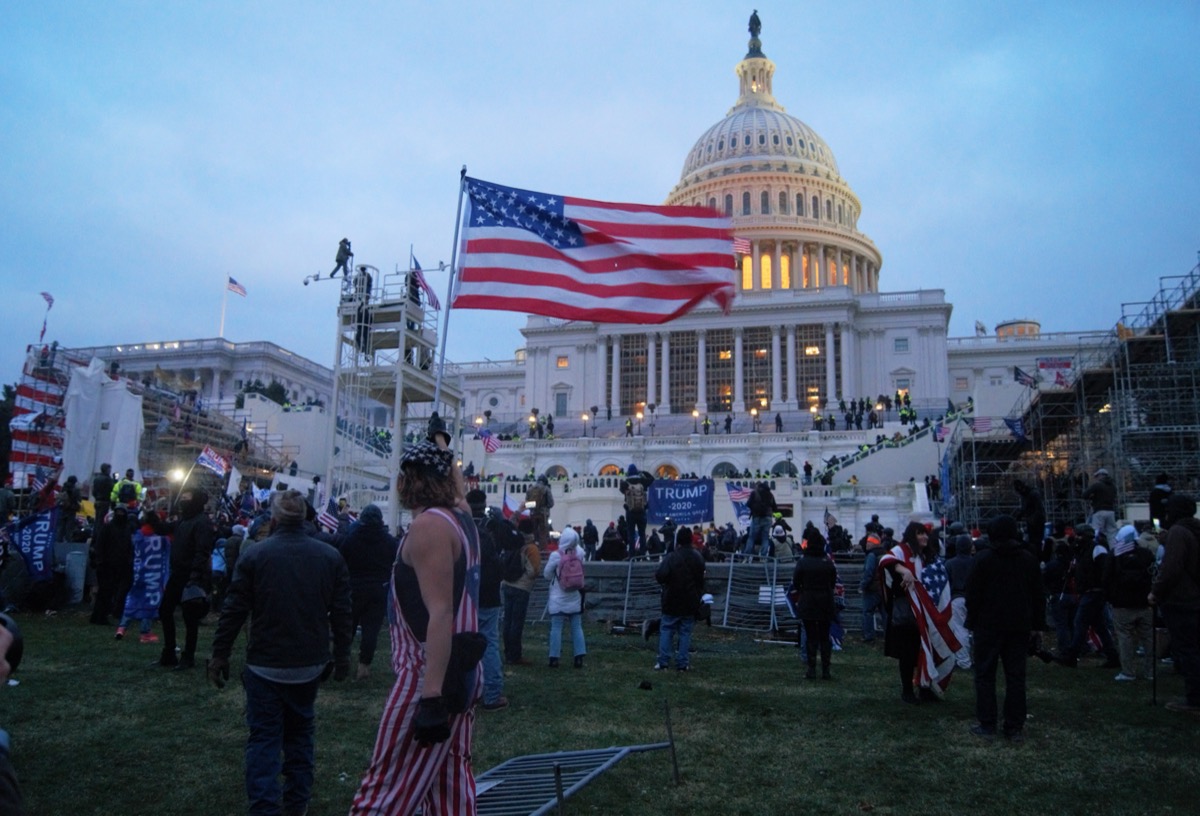
During those three hours and seven minutes, Vice President Mike Pence was evacuated. A Capitol Police officer was dragged into the mob and beaten with his own weapon.2 "Hang Mike Pence" echoed through the halls of Congress.3 A woman was shot climbing through a shattered window toward fleeing lawmakers. And the President of the United States—the commander-in-chief of the most powerful military in human history—made phone calls to legislators asking them to delay certification.
Today marks five years since that attack. Donald Trump is once again the President. The rioters have been pardoned.4 The Republican Party, which hid from the mob that day, now governs at the pleasure of its leader. The revisionism has been so thorough that Trump now calls January 6 a "day of love."5
But the 187 minutes remain. They are documented. They cannot be revised away.
He watched. And that watching—that deliberate, sustained inaction—tells us everything we need to know about the man who twice held the presidency.
Part I: How We Got Here
To understand the 187 minutes, you must first understand the two months that preceded them. The attack on the Capitol did not emerge from nowhere. It was summoned.
2:30 AM: The Lie Is Born
The 2020 presidential election was held on November 3rd. By 2:30 in the morning on November 4th, with millions of votes still uncounted in Pennsylvania, Michigan, Arizona, and Georgia, Donald Trump appeared in the East Room of the White House and declared victory.
This was a lie. Not a spin, not an interpretation, not a disputed claim—a lie. He was losing. The votes that remained to be counted were disproportionately mail-in ballots, which Democrats had used more than Republicans. Everyone who understood elections knew he was on track to lose. He declared victory anyway.
It was premeditated. His advisors later testified that he had decided in advance to declare victory regardless of the actual results. The plan was to create momentum, to establish a narrative of a stolen election before the counting was complete. At 2:30 AM, with the nation watching, the Big Lie was born.
"Stop the Count!"
By the following morning, Trump's lead was evaporating as votes were tallied. He took to Twitter: "STOP THE COUNT!"
Note the demand: not "count fairly," not "investigate fraud," but "stop the count." He was not asking for accuracy. He was asking for democracy to cease because he was losing. It was the most nakedly authoritarian demand ever issued by an American president—and it was issued via tweet.
Four Seasons Total Landscaping
On November 7, 2020, the major networks called the election for Joe Biden. Donald Trump was golfing at the time. Meanwhile, Rudy Giuliani—the former mayor of New York, the "America's Mayor" of September 11th, now reduced to personal attorney for a losing president—held a press conference at Four Seasons Total Landscaping, a lawn care business in an industrial district of Philadelphia, between a crematorium and a sex shop called Fantasy Island.6
This was not parody. This actually happened. Someone on the Trump campaign had apparently confused Four Seasons Total Landscaping with the Four Seasons Hotel. By the time they realized the error, it was too late. And so Giuliani stood in a parking lot, next to stacks of mulch, declaring that the election had been stolen.
The absurdity of the setting matched the absurdity of the claims. There was no evidence of fraud because there was no fraud. Every lawsuit would be dismissed. Every audit would confirm the results. But the claim had been made, and Trump's supporters believed it, and that belief would carry them to the Capitol in two months.
Part II: The Pressure Campaign
When the lawsuits failed—all sixty-plus of them, including before Trump-appointed judges—Trump turned to a different strategy. He began personally pressuring officials in swing states and at the Department of Justice to overturn the results.
On November 20, Trump summoned the Republican leaders of the Michigan state legislature to the White House. The purpose was not subtle: he wanted them to refuse to certify Biden's victory in Michigan and instead appoint Trump electors. This would have been a constitutional coup. The legislators refused.
On January 2, 2021, Trump called Georgia Secretary of State Brad Raffensperger and made the most damning request of all:7
That was one more than Biden's margin of victory. The call was recorded. It was a president of the United States, on tape, soliciting election fraud.
The Martial Law Meeting
On December 18, 2020, Trump held what participants described as an "unhinged" meeting in the Oval Office. Among those present were Michael Flynn—recently pardoned for lying to the FBI8—and Sidney Powell, the "Kraken" attorney whose conspiracy theories had become too wild even for the Trump campaign.
Flynn proposed declaring martial law and using the military to seize voting machines.9 Powell pushed her conspiracy theories about foreign interference. Trump was sympathetic. White House counsel Pat Cipollone reportedly burst into the meeting to stop it.
The next day—December 19—Trump sent the tweet that would summon the mob: "Big protest in D.C. on January 6th. Be there, will be wild!"10
When the martial law option was blocked, Trump pivoted to the mob. The timeline is unmistakable.
Part III: The Morning Of
January 6, 2021. A cold, gray morning in Washington, D.C.
By dawn, crowds had gathered at the Ellipse, the park just south of the White House. They carried Trump flags, American flags, and signs proclaiming the election stolen. Some wore body armor. Some carried zip ties. The Proud Boys, notably, left the main rally early—they were heading to the Capitol to prepare.11
Trump took the stage at noon. For over an hour, he repeated the lies: the election was stolen, the evidence was overwhelming, the country was being taken from them. His language was not subtle.
At approximately 1:00 PM, Trump concluded. "We're going to walk down to the Capitol," he told the crowd. "So let's walk down Pennsylvania Avenue."
But Trump did not walk down Pennsylvania Avenue. The Secret Service drove him back to the White House. He went inside. He entered the dining room adjacent to the Oval Office.
And he sat down to watch.
Part IV: The 187 Minutes
This is the heart of the story. Not the lies that preceded the attack, not the consequences that followed, but the three hours and seven minutes when the president of the United States sat in a dining room watching a mob attack the Capitol—and chose not to stop it.
Timeline
Trump enters the White House dining room. He settles in to watch Fox News. The crowd he just addressed is walking down Pennsylvania Avenue toward the Capitol.
Timeline
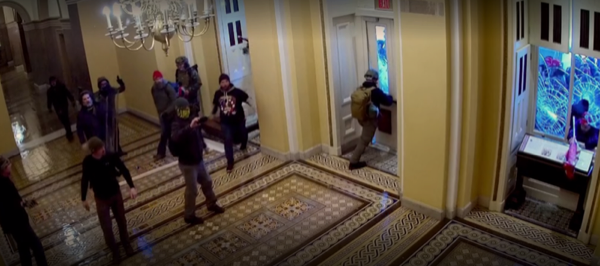
Secret Service evacuates Vice President Pence from the Senate chamber. Rioters are in the building. "Hang Mike Pence" echoes through the halls. Trump, in the dining room, is informed that Pence has been evacuated. According to testimony, his response was: "Maybe our supporters have the right idea. Mike Pence deserves it."12
Timeline
Officer Michael Fanone is dragged into the mob. They beat him with a flagpole. They tase him until he has a heart attack. They shout "Kill him with his own gun!" He suffers a traumatic brain injury. He will later watch as Trump pardons his attackers.2
Timeline
Trump, rather than calling off the attack, tweets: "Mike Pence didn't have the courage to do what should have been done."13 The attack on Pence—already underway—intensifies.
Timeline
House Minority Leader Kevin McCarthy calls Trump from inside the Capitol, where he is hiding from the mob. He begs Trump to call off the attack. Trump's response: "Well, Kevin, I guess these people are more upset about the election than you are."
Timeline
Finally, after three hours, Trump releases a video from the Rose Garden. In it, he tells the rioters: "Go home. We love you. You're very special."14 He repeats the election lies. He does not apologize. He does not condemn the violence.
What makes the 187 minutes so damning is not just what Trump did—it's what he didn't do. He did not call the Secretary of Defense. He did not activate the National Guard. He did not tell the rioters to go home until four hours after his speech. He did not check on his Vice President, who had been evacuated while rioters chanted for his execution.
He could have stopped it at any moment. He chose not to. For three hours and seven minutes, the attack served his purpose.
Part V: What Should Have Ended Him
By evening on January 6, as the Capitol was secured and Congress returned to certify the election, the conventional wisdom was that Trump was finished. His own cabinet members discussed invoking the 25th Amendment. Republicans who had enabled him for years issued statements of condemnation.
On January 13, the House impeached Trump for incitement of insurrection.15 Ten Republicans voted in favor—the most bipartisan impeachment in American history.
On February 13, the Senate voted 57-43 to convict—the most bipartisan conviction vote in impeachment history. Seven Republicans joined all Democrats. But conviction required 67 votes. Trump was acquitted.
Then something extraordinary happened. Mitch McConnell, who had just voted to acquit, took the Senate floor and delivered a speech declaring Trump "practically and morally responsible" for the attack.16 He called Trump's conduct "a disgraceful dereliction of duty."
Just sixteen days after McConnell's speech, Kevin McCarthy—the House Minority Leader who had hidden from the mob and cursed at Trump on the phone—flew to Mar-a-Lago to meet with Trump.17 Photographs showed them smiling together.
The pilgrimage sent a message: the Republican Party was not going to break with Trump. The man they blamed for the attack, the man who refused to call off the mob, the man who watched for 187 minutes—he was still their leader.
Part VI: The Rehabilitation
The years that followed tell a story of deliberate amnesia.
Each January 6 anniversary revealed how far the revisionism had progressed.
2022: Trump attacked Biden's commemoration speech as "political theater" but stayed relatively quiet about the rioters themselves. He was still testing the waters. Meanwhile, he promised pardons at a Texas rally.18
2024: By the third anniversary, Trump was calling the imprisoned rioters "hostages" and "patriots." His rallies featured the "J6 Choir"—recordings of imprisoned insurrectionists singing the national anthem.
2025: Trump called January 6 a "day of love."5
The progression was complete. What began as a liability had become a campaign feature. The attack was no longer to be explained away but celebrated.
On January 20, 2025, Donald Trump was inaugurated as the 47th President of the United States. On his first day in office, he signed mass pardons for January 6 defendants—over 1,500 individuals, including those convicted of assaulting police officers.4
The message was unmistakable: violence in service of Trump would be rewarded. The foot soldiers had served their purpose. Now they were heroes.
Epilogue: Five Years Later
Today is January 6, 2026. The fifth anniversary of the attack on the United States Capitol.19
Donald Trump is president. The rioters are free. The Republican Party does not commemorate the anniversary. The Members of Congress who hid from the mob now govern alongside its leader. The revisionism is so complete that many Americans—exposed to years of "hostages" and "day of love" rhetoric—genuinely believe January 6 was a peaceful protest.
But the 187 minutes remain.
They are documented in contemporaneous notes. They are confirmed by testimony from Trump's own staff. They are visible in the timeline of tweets and phone calls and videos. They cannot be revised away because they are not interpretation—they are facts.
For three hours and seven minutes, the President of the United States watched a mob attack the seat of American democracy. He watched police officers beaten. He watched lawmakers flee. He watched his own Vice President evacuated as rioters chanted for his execution.
And he did nothing.
Not because he couldn't. Because he didn't want to.
That is the story of January 6. Not the rally, not the march, not even the violence itself—but the man in the dining room, watching it unfold, and choosing to let it continue.
He watched.
And four years later, they put him back in the Oval Office.
History will not forget. Neither should we.
Notes & Sources
- The 187-minute timeline is documented in the Jan. 6 Committee's final report. View in Griftbook →
- Officer Michael Fanone was dragged into the mob, beaten, tased, and suffered a heart attack and traumatic brain injury. View in Griftbook →
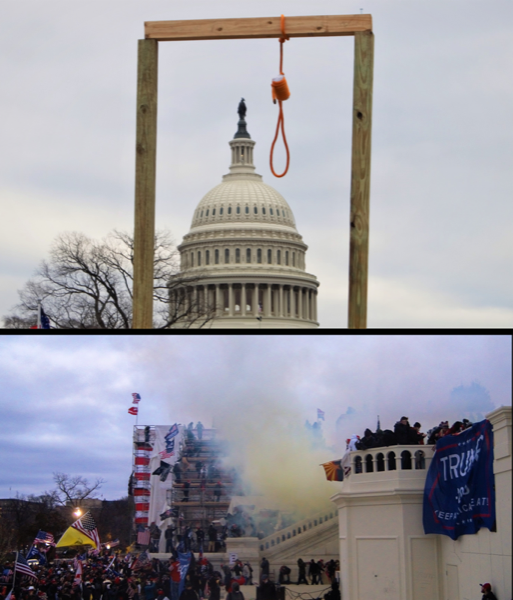
- The mob chanted "Hang Mike Pence" as a gallows stood on the Capitol grounds. Pence came within 40 feet of the mob. View in Griftbook →
- Trump issued mass pardons on his first day in office, covering over 1,500 January 6 defendants. View in Griftbook →
- On the fourth anniversary, Trump called January 6 a "day of love." View in Griftbook →
- Giuliani's Four Seasons Total Landscaping press conference became an iconic symbol of the campaign's absurdity. View in Griftbook →
- The Raffensperger call was recorded. Trump explicitly asked to "find" exactly the number of votes needed to overturn Georgia. View in Griftbook →
- Trump pardoned Flynn on November 25, 2020—weeks before the martial law meeting. View in Griftbook →
- The December 18 "unhinged" meeting included discussion of martial law and seizing voting machines. View in Griftbook →
- The "Be there, will be wild!" tweet was sent the day after the martial law meeting was shut down. View in Griftbook →
- The Proud Boys were later convicted of seditious conspiracy for their role in coordinating the attack. View in Griftbook →
- Cassidy Hutchinson's testimony revealed Trump's reaction to the "Hang Mike Pence" chants. View in Griftbook →
- Trump tweeted attacking Pence while rioters were actively hunting for him inside the Capitol. View in Griftbook →
- The "go home, we love you" video was the first statement Trump made to the rioters—over three hours after the attack began. View in Griftbook →
- The House impeached Trump for "incitement of insurrection" on January 13, 2021—one week after the attack. View in Griftbook →
- McConnell's floor speech called Trump "practically and morally responsible"—minutes after voting to acquit. View in Griftbook →
- McCarthy's pilgrimage to Mar-a-Lago signaled the GOP's rapid capitulation. View in Griftbook →
- Trump's first public promise of pardons came at a Texas rally in January 2022. View in Griftbook →
- On the fifth anniversary, the GOP made no official commemoration. View in Griftbook →